Cape Whale Coast

Travel Packages & Tours

Travel To Cape Whale Coast

The Cape Whale Coast stretches along the southern coast of South Africa in the Western Cape, roughly two to three hours’ drive from Cape Town International Airport. Renowned for its marine life and pristine beaches, it is a must-visit for travellers seeking breathtaking coastal scenery, wildlife encounters, and outdoor adventure.

What makes the region unique is its combination of whale watching, charming coastal towns, and family-friendly activities that appeal to all ages. The Whale Coast includes towns such as Hermanus, famous for shore-based whale watching, Gansbaai, known as the great white shark capital, Kleinmond, offering stunning beaches and nature reserves, and Betty’s Bay, home to the African penguin colony and Stony Point Nature Reserve.

Visitors come for whale and marine life spotting, scenic drives, hiking trails, and seaside relaxation. The Cape Whale Coast blends adventure, wildlife, and natural beauty in a way that few coastal regions can, making it a highlight of any South African itinerary.

cOUNTRY
South Africa
Currency
South African Rand ZAR
Language
English is widely spoken
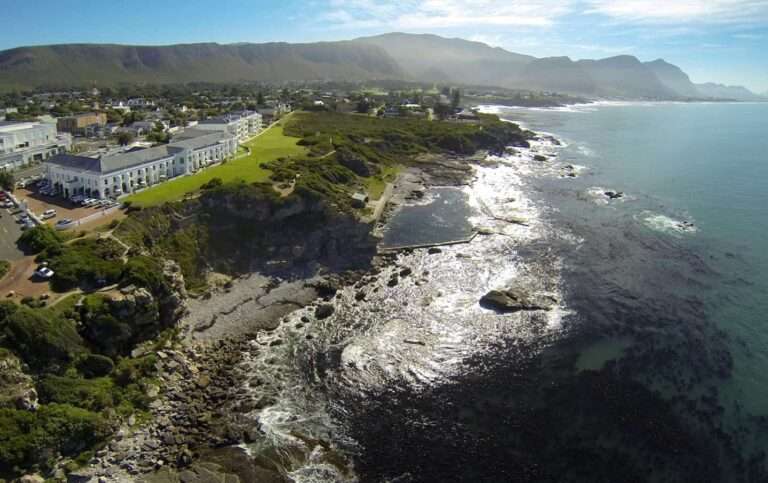
The Marine Hotel in Hermanus
Cape Whale Coast
Cape Whale Coast
Cape Whale Coast

Travel Information

Travellers from the United States, United Kingdom, Canada, Australia, and most EU countries, can enter South Africa without a visa for up to 90 days. Travellers from other countries need to apply for a visa before arrival at a South African embassy or consulate. Passports must be valid for at least 30 days after departure and have two blank pages for entry stamps.

Vaccinations
There are no mandatory vaccines for entry. Malaria prophylaxis is advised for travel to certain regions in the northeast, including the Kruger area. A yellow fever vaccination certificate is required if you are arriving from or transiting through a country with yellow fever risk. Routine vaccinations such as tetanus, hepatitis A and B, and typhoid are recommended.

Cape Town International Airport (CPT)
Located in the suburb of Matroosfontein, roughly 20 km northeast of Cape Town city centre.

Stellenbosch Airfield
Located just outside the town of Stellenbosch in the Western Cape, about 50 km east of Cape Town. It primarily serves private and light aircraft and is close to the Cape Winelands region.

Morningstar Airfield
Situated near the town of Durbanville, approximately 25 km north of Cape Town. It is a small private airstrip used mostly for light aircraft and recreational flying.

Fisantekraal Airfield
Located near the village of Fisantekraal, about 45 km north of Cape Town. This is a private and agricultural airstrip, often used for small planes and pilot training.

Hermanus
Known worldwide for its shore-based whale watching, Hermanus also offers cliff paths, beaches, and a charming town centre.

Gansbaai
Famous as the great white shark capital of the world, Gansbaai is also a hub for marine safaris and coastal wildlife experiences.

Kleinmond
A quieter coastal town with beautiful beaches, wetlands, and nature reserves, ideal for relaxed walks and birdwatching.

Betty’s Bay
Home to the African penguin colony at Stony Point and the Harold Porter Botanical Garden, offering a mix of wildlife and natural beauty.

Pringle Bay
A small, picturesque village with calm beaches and rugged coastline, popular for surfing and coastal walks.

Onrus
A family-friendly coastal village with safe swimming beaches and local eateries, perfect for a relaxed seaside visit.

Stanford
A quaint riverside village known for boutique wineries, art galleries, and eco-tourism activities along the Klein River.

Cape Town has a diverse food scene influenced by African, European, and Asian cuisines. Visitors can try seafood, traditional braai, Cape Malay dishes, and meals at wine estates. Restaurants range from casual cafés to fine dining. Markets and food festivals provide additional opportunities to experience local flavours.

The food scene in Bo-Kaap reflects the area’s Cape Malay heritage and cultural diversity. Traditional dishes often feature a mix of spices, sweet and savory flavours, and fresh ingredients. Popular offerings include curries, pickled vegetables, bobotie, samoosas, and koeksisters. Many local restaurants, cafés, and cooking schools offer authentic Cape Malay meals, often with opportunities for visitors to learn about the recipes and cooking techniques.

Dress is generally casual and depends on the weather. Smart casual is suitable for restaurants, wine estates, and cultural sites. Visitors are expected to be polite, punctual, and respectful of local customs and environmental guidelines.

What's Happening in Cape Whale Coast

In January, Cape Town hosts several major events for both locals and visitors. The Cape Town Minstrel Carnival on January 2 celebrates Cape Malay heritage with costumes, music, and dancing. The L’Ormarins King’s Plate at Kenilworth Racecourse combines horse racing with fashion and entertainment. Kirstenbosch Summer Sunset Concerts offer open-air performances throughout the month, and the SA20 Cricket League final at Newlands Cricket Ground showcases top T20 cricket talent. These events provide a mix of cultural, sporting, and entertainment experiences. Cape Town’s summer weather in January, with temperatures between 14°C and 26°C, is ideal for outdoor activities. Visitors can hike in Table Mountain National Park, relax on beaches, explore vineyards and nature reserves, or enjoy wildlife viewing and boat trips.
February remains warm and dry, making it another excellent month for outdoor activities. Major events take place, including the Cape Town Open golf tournament, the Cape Town Pride Festival, and several food and wine celebrations. The sea is at its warmest, and evenings are ideal for al fresco dining and sunset cruises.
March brings slightly cooler temperatures and continues the lively event season. The Cape Town International Jazz Festival, one of the city’s biggest music events, takes place around this time. Sports events, theatre performances, and food markets remain popular. The weather stays pleasant, with little rain and mild evenings.
April marks the start of autumn. The weather is moderate and comfortable for sightseeing, and crowds start to thin. The Two Oceans Marathon is the highlight of the month, attracting runners from around the world. Occasional light rain appears toward the end of the month, but outdoor activities remain enjoyable.
May is quieter, with cooler temperatures and the first signs of winter rainfall. The tourist crowds have eased, and the focus shifts to the Cape Winelands, where wine and food festivals take place. This is a great time for a relaxed visit, with crisp mornings and fewer visitors at major attractions.
June brings the onset of winter, with cooler days and frequent rain. The atmosphere turns cozy, and the city’s indoor culture comes alive through theatre, live music, and dining experiences. This is also the start of whale-watching season along the coast, particularly in nearby Hermanus and False Bay.
July is one of the coldest months, with rain and cool winds common. However, Cape Town remains lively with winter arts festivals, comedy events, and exhibitions. Nature lovers enjoy excellent whale sightings, and early wildflowers begin to appear along the West Coast toward the end of the month. The Table Mountain Aerial Cableway usually closes for annual maintenance in late July or August, so visitors should check the official website for exact dates before planning their trip.
August is still cool and wet but marked by Women’s Day celebrations and food and wine festivals. The countryside begins to transform as wildflowers bloom across the Western Cape. Whale watching continues, and days slowly become longer and warmer. The Table Mountain Aerial Cableway usually closes for annual maintenance in late July or August, so visitors should check the official website for exact dates before planning their trip.
September is the beginning of spring. The weather improves, with less rain and rising temperatures. This is the peak of wildflower season, especially in areas like Darling and the West Coast National Park. The whale-watching season continues, and outdoor activities start to pick up again.
October offers warm, pleasant days and marks the full arrival of spring. It is a good time for outdoor festivals and coastal drives. The Hermanus Whale Festival often takes place around this time, and the landscape is still green from winter rains.
November is a shoulder month between spring and summer. The weather is sunny and dry, perfect for outdoor dining, beach visits, and vineyard tours. The city hosts several food and wine events and prepares for the summer tourist season.
December is peak summer and one of the most vibrant months in Cape Town. The weather is hot and dry, and festive celebrations fill the city. Beaches, hiking trails, and restaurants are busy, and the year ends with concerts, holiday markets, and New Year’s Eve festivities across the city and along the coast.
Travel Ideas
Itineraries to this destination

Ready to take the Next Step?

Preferred comfort level:
Preferred transport type: