

The Cape Whale Coast lies east of Cape Town in the Overberg region, stretching along a shoreline that attracts visitors for its open sea views and quiet bays. The area is recognised for seasonal whale migrations, easy access to coastal viewpoints and a network of protected marine zones that support breeding and feeding.
Travellers choose this route for self drive holidays, weekend escapes and time outdoors with walking paths, beaches and small towns that are simple to navigate. It is a place where the pace slows, the ocean sets the rhythm and, with a little patience, the rewards are well worth the wait. One might say it is the perfect destination for those wanting a trip that makes a real splash without rushing the experience.

Cape Whale Coast Towns and Areas
Hermanus is the main town in the region and sits along Walker Bay. It has a long cliff path for whale viewing, beaches, galleries and a harbour for boat departures.
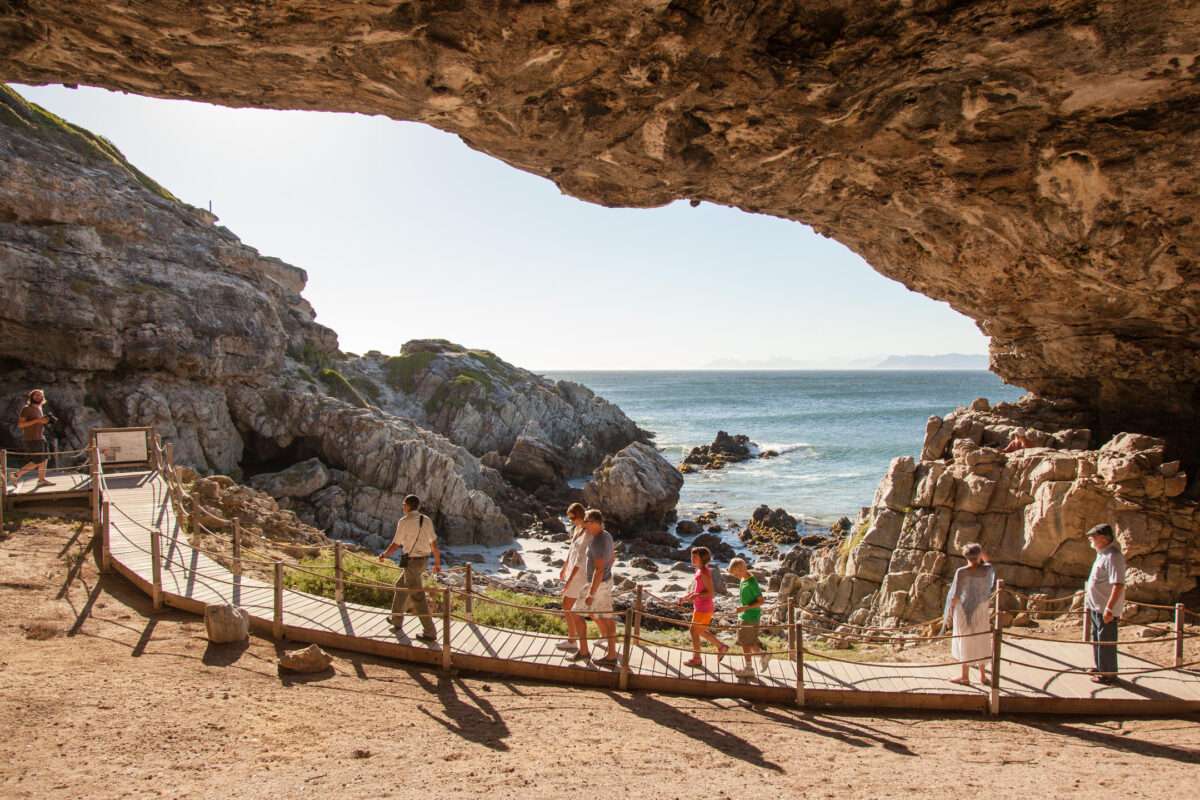
Gansbaai sits south of Hermanus and is known for boat trips that operate in season. De Kelders offers quiet cliffs and caves along the shore with footpaths for viewing during peak months.
Stanford is a short drive inland. It sits along the Klein River and suits visitors who want slower village life, wine farms and birding. River cruises operate in season.
Kleinmond and Betty’s Bay are closer to Cape Town along Clarence Drive. They feature beaches, nature gardens and small reserves for short walks and coastal access.
Pringle Bay and Rooi Els have small beaches, tidal pools and hiking routes. They are quiet, low traffic areas suited to self catering stays.

Whale Watching
Southern right whales migrate along the Cape Whale Coast each year to calve and mate, gathering close to shore where the water is calmer and suitable for young calves. These whales are often seen breaching, tail slapping and resting at the surface, which makes them easier to observe from land without the need for a boat. The main viewing season runs from June to November and the busiest months are August, September and October, when mothers and calves are most active in the bays.
During this period they remain close to beaches, harbours and cliff paths, and sightings are frequent on clear days with low wind. Other whale species also move through these waters, and humpback and Bryde’s whales are sometimes recorded toward the later part of the season when migration routes shift. These additional species are less predictable but add interest to boat trips and guided marine outings.

How to Get There
The Cape Whale Coast sits within easy driving reach of Cape Town, and most visitors arrive by car. The average travel time is between one and a half and two and a half hours, depending on the chosen town or lodge. The fastest route follows the N2 through Somerset West and over Sir Lowry’s Pass.
An alternative option is the R44 coastal route via Clarence Drive, which is slower but known for sea views and photo stops. Car rental works best for independent travel and for exploring towns and nature areas at your own pace. Private road transfers can be arranged through hotels or tour operators, although regular public transport is limited and not suited to flexible sightseeing.
Good Trip Combinations
A visit to the Cape Whale Coast pairs well with other major regions in the Western Cape. Many travellers start or end with Cape Town for city attractions, beaches, Table Mountain and historical sites. Wine lovers often add Stellenbosch or Franschhoek for tastings and cellar visits, as both areas are within short driving distance.
The Hemel en Aarde Valley near Hermanus is another useful add on for cool climate wines and farm style dining. A longer holiday can continue east toward the Garden Route, linking coastal forests, lagoons and national parks. Splitting time between the Whale Coast and one or two nearby regions creates a balanced itinerary without long hours of travel.


